

Art for the places where healing happens
Art Consulting & Curation for Healthcare Environments
People remember the rooms where their lives changed — the light, the quiet, the thing on the wall they stared at for hours.
Healing Light provides art consulting and curation for healthcare and healing environments, bringing together art, architecture, and an understanding of the people who will live with the work.


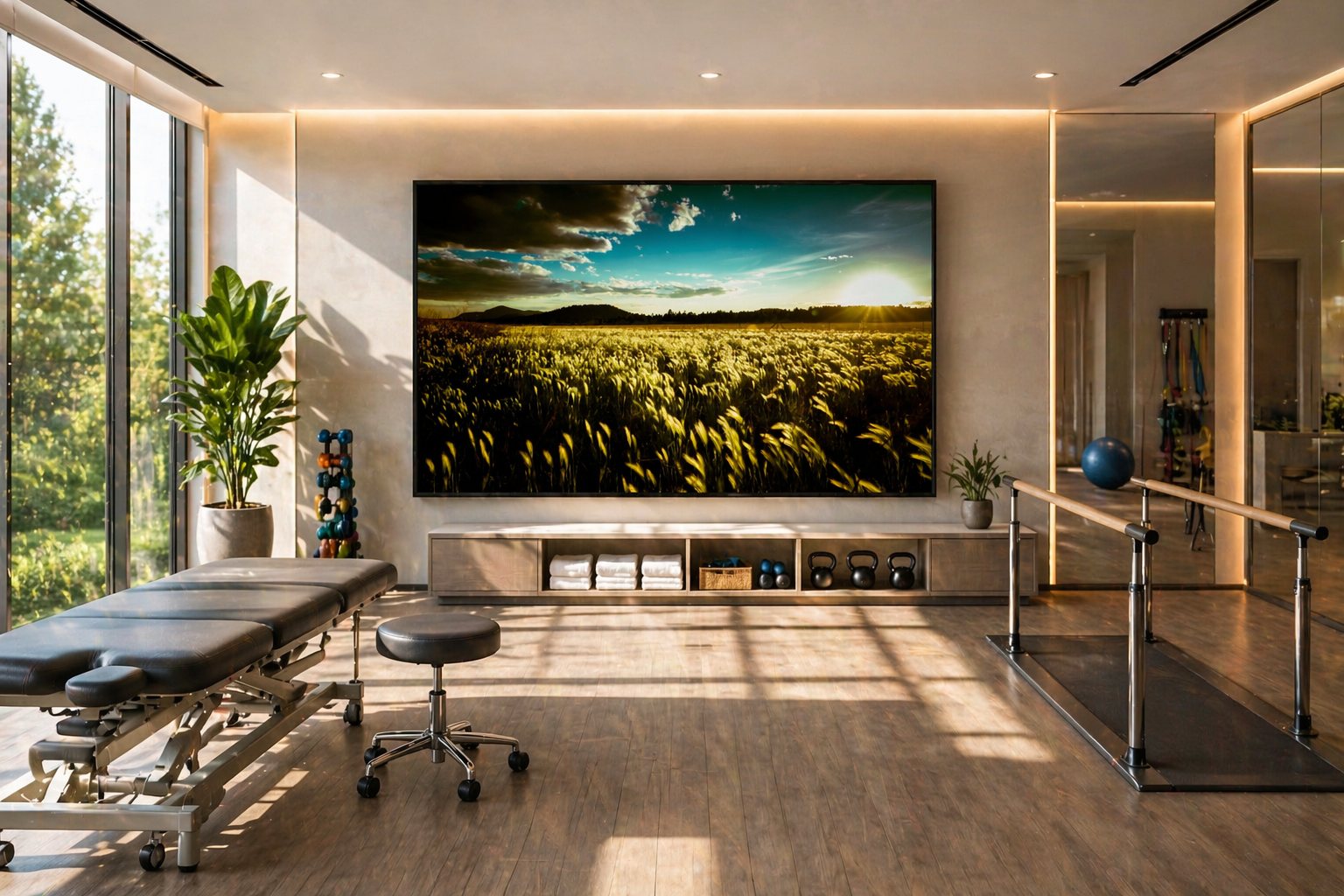
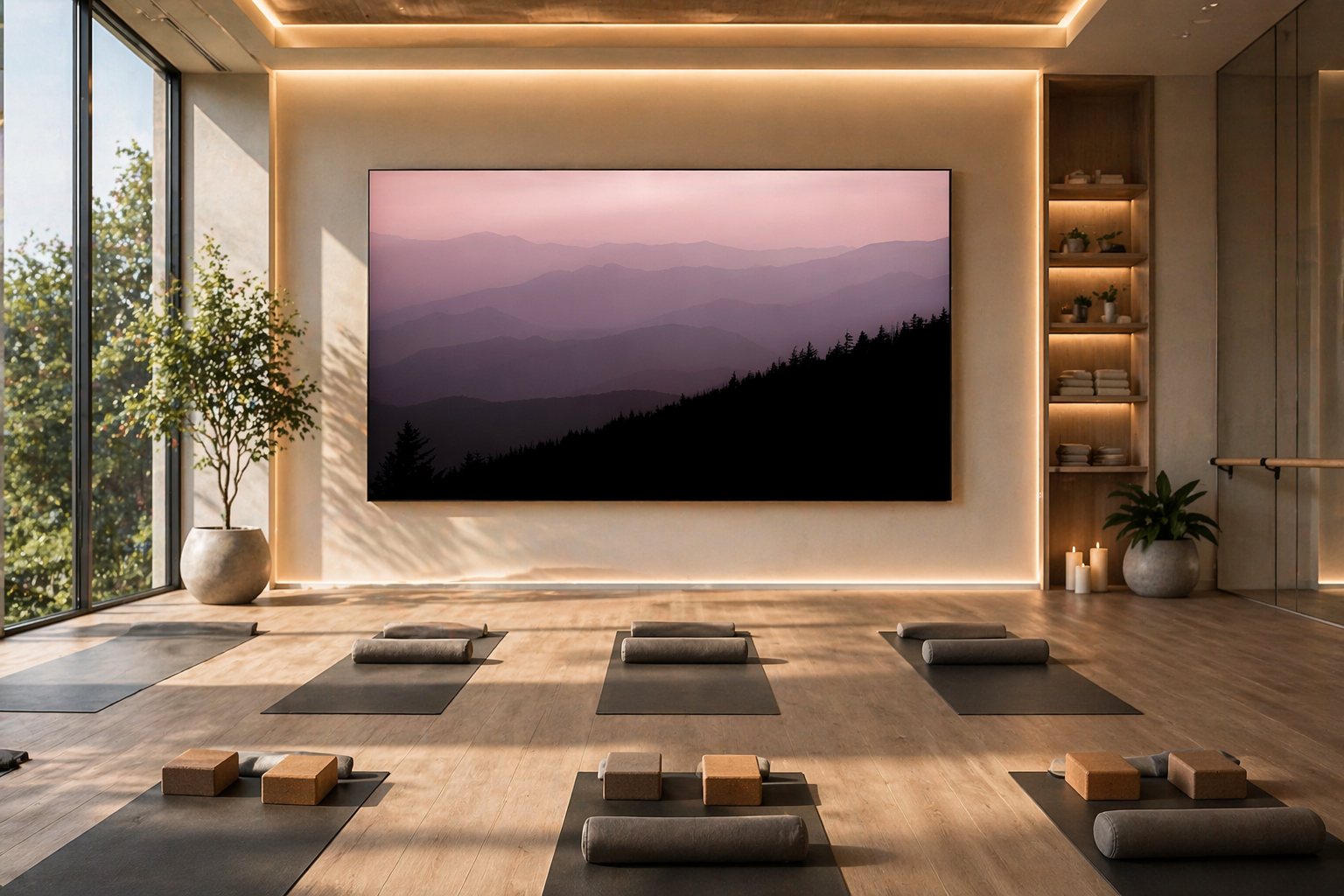


A hospital room is never neutral.
It is where news is delivered and long nights are kept.
For the person in the bed, what hangs on the wall is not simply art.
It is the view.
Decades of research have examined the relationship between the environment of care and stress, pain perception, recovery, and patient experience.
Art is not treatment.
But the environment matters, and it deserves deliberate attention.
The question is not simply what looks good.
It is what belongs here — for this room, these people, and this moment.
That is where curation begins.
The question of whether surroundings affect the experience of care has been studied for decades.
Shorter recovery
Twenty-three matched pairs of surgical patients: those with a window view of trees went home sooner, drew fewer negative nursing notes, and used fewer strong analgesics than those facing a brick wall. Small and observational—but it opened the field.
Daylight and stress
Spinal-surgery patients on the brighter side of the hospital received about 46% more sunlight, reported less stress, and used 22% less analgesic medication per hour.
Windows and length of stay
Across more than 85,000 hospitalizations, window-adjacent beds were associated with shorter stays.
Imagery, randomized
Eighty bronchoscopy patients were randomized to standard care or a bedside nature mural with nature sounds. The nature group reported substantially better pain control.
Content matters
In an acute psychiatric unit, realistic nature imagery was associated with less as-needed medication for anxiety and agitation than abstract imagery or no artwork.
Calmer waiting
After still and moving nature imagery was installed in two emergency-department waiting rooms, observers recorded less restlessness, less noise, and less staring at other patients.
The whole environment
In 180 pre-operative patients, photographic displays alone produced modest effects; photography combined with music reduced anxiety-related physiological measures more consistently.
Patient Satisfaction
When 186 hospitalized cancer patients were randomized to rooms with or without artwork, patients rated the environment of care significantly more favorably in those rooms with art.
Randomized trial, oncology inpatients
Every project begins with listening.
Not with a catalog.
We look at the building, the people moving through it, and what a long day there actually feels like.
Only then does selection begin.
Work is drawn from the Healing Light collections and considered against the patient population, clinical function, viewing distance, dwell time, sightlines, scale, palette, available light, and architecture.
Piece by piece. Room by room.
The objective is not to fill walls.
It is to compose a place that is intentional and coherent.
01 — Request a consultation
Tell us about the space. That opens the project and brings the intake directly to you.
02 — Your intake
A short series of questions about who uses the room, how it should feel, and what draws you. Some things cannot be measured.
03 — The Curator
Our proprietary Curator reads the wall, light, palette, proportions, and intended use of the room. It then lets you see selected work at scale before anything is ordered.
04 — Curatorial direction
The pieces come together: what you told us, what the room measures, what the Curator sees, and what the evidence supports. None of those elements makes the decision alone.
05 — Coordination
We coordinate the artwork, production specifications, framing, placement, and installation requirements so the curatorial intent survives contact with the building.
06 — Design sessions
When the details matter, sit down with our design team and work through the room together. Where each piece belongs, what size, what frame, how the wall reads from the doorway and from the chair.
Book design hours, or reach us at designs@healing-light.org.
Traditional art programs can pass through galleries, licensing agencies, consultants, distributors, and production vendors before a piece reaches the wall.
Healing Light is different.
The artist is the firm.
The collections are owned outright and produced to order by our fine-art production partner using professional materials and finishing.
No image licensing layer. No gallery middleman.
Fewer hands between the photograph and the wall.
The consultation also comes from the photographer — a physician who has spent a career in the kinds of rooms where this work is intended to hang.
One perspective carries the project from beginning to end.
From the lens to the wall.
A single piece or an entire floor — the process is the same.
Tell us about the space.
What comes back is a curatorial proposal, not a catalog.
Already requested a consultation? Open the intake link in the email we sent you.